Showing posts with label African Chronicles 2006. Show all posts

Friday, September 28, 2007

The Caped Crusader and the Kingfisher's Dinner

The birds of Africa add great beauty, interest and a few laughs to my adventures. Their antics and habits are fascinating, sometimes comical. Also, thought provoking.


Wandering through the Okavango Delta, our guide, Tony Reumerman, of Wilderness Safaris, points out the Slaty egret. I learn that the Slaty Egret is a red data species-- critically endangered -- and this sighting is "really quite special", in Tony's words. Then we see a Black Egret and his unusual fishing style. Looking like your normal, everyday egret,


he turns into the caped crusader to lure fish into a seemingly protective shadow.

Then, of course, he zaps them!


On a remote island near Xigera in the Delta, while the morning is still cool and fresh, we crane our necks to look up into the thick, overhanging branches to search out the elusive and, again, critically endangered Pel’s Fishing Owl. Finally, Sam, our local guide sees a splash of golden color among the leaves.


We stay for a while hoping he may call to us but I will have to be content with this recording of what I might have heard. http://www.owlpages.com/sounds/Scotopelia-peli-1.mp3
It is time to allow him to return to his solitude.


When I look at this magnificent creature it is difficult to comprehend that within a few years, none may survive. Man continues to encroach on his habitat and their numbers decline in some areas at the rate of 25% per year. My grandchildren probably will never have the chance to see this rare species.


With over 3500 animal species threatened or endangered, there are creatures that will become extinct before I have the chance to see them, nevermind my grandchildren. If I were to see one endangered species a day, it would take .... Well, you do the math.


Thinking positively, I could run out of animals to see in that ten year period because we reverse the trend of endangering species by protecting habitats, reducing the use of chemicals and slowing global warming. But I could also run out of animals to see because they become extinct before I get to them.

Late afternoon and a happy ending...

Late afternoon and everyone starts thinking about dinner and a drink.

After a day of grazing, the buffalo, the impala and the els pick late afternoon for a last drink before dark.

Wild dogs don’t fair well against mightier predators so they want dinner in the late afternoon before competition comes on the scene.


The Pied Kingfisher needs to be able to see to hunt. Hovering above the water looking for his prey, he dive bombs his target and then, according to the bird books, will either hit it against a branch to kill it or sometimes, will drop it repeatedly on a rock.


Looking for wild dogs this afternoon, we find a kingfisher that hit the mother load of fish..... She looks so proud holding dinner in her beak…


We watch as she gets the fish positioned properly to swallow it.


At this point, it doesn’t seem possible. Kingfisher versions of “The one that got away…” dance through my mind.


Then, she throws her head back and brings the fish down on her perch with incredible force.


After several whacks against the branch, she tries again, to get the fish in her beak.


Still no go.

Whack, whack, whack…. She tries again. Aha! Not just to kill her prey does the kingfisher beat her catch, she wants to pulverize it so it will go down easier!


This is hard work and she looks a little ruffled.


She seemed to be saying, “What was I thinking?”


Finally!


Well, maybe not. The fish seemed to be stuck –


Not going in, but not able to come out for further tenderizing. I wonder how many kingfishers are found feet up at the base of a tree with beak half stuffed with a fish just too big to swallow. Gluttony!


She stretched her neck…


Almost too slowly to see, she made progress.


And ever so slowly,


the fish disappeared…


Kingfisher smile...


Most amazing is that she immediately flies off to another branch to watch the river flowing below presumably looking for dessert.

Friday, July 27, 2007

Returning to Africa

It is late afternoon by the time we arrive at the airport and there are miles still to go before we reach camp. Yet, I stop for the first namaqua dove scratching in the dirt of the roadway. I stop for the first herd of cape buffalo enshrouded in a cloud of the dry earth that marks the season. I stop for the first blood red sunset filtering through the acacia trees, dust motes dancing and swirling in the riotous light. The light fades and the colors dim to the pastels of Africa. Each is a first -- but only for this trip.


Every time I return to Africa, I vow to take it more slowly, to remember every moment, to write down every sensation, every smell, to photograph every wonder. Hold that my eyes are mesmerized by the rich golds and browns of the landscape and the intricate patterns unbroken by macadam and concrete.


How to capture forever the sounds of the night, the dawn waking of the bush, the hum of the warm afternoons, the lyrical, patient voices of the people? My answer -- to begin slowly, deliberately, to ensnare it all in my memory.

But with every return, fresh experiences crowd my visit. I see new plants, places and animals. New antics and behaviors. An unfamiliar scent mingles with my memories – the new smell? Acacias are in bloom this year, I’ve never smelled their bright yellow blossoms.


Slashes of red mark the green and catch my eye as we speed past another plant I overlooked on my last visit. Vultures circle overhead in the distance. We reach a dry riverbed with steep banks and I take the measure of our driver as he begins the descent at what seems at least a 90 degree angle. Safely to the other side it is only minutes until he slows at movement in the bush. Lions mate. We haven’t even reached camp yet.


Before I sleep, zebra, buffalo and elephant will stare at my passage; a pair of honey badgers will lumber through the underbrush oblivious to the lights of the land rover.


With only the look in their eyes, giraffe will register my presence.


We’ll find the giant eagle owl that we hear calling; a little creature called an elephant shrew will dive from the beams of our headlights.


I will meet the staff at the camp and marvel at their fortune at working in this paradise. Over dinner, tales of the day’s adventures shared by fellow travelers will captivate me and I'll wish my arrival had been a day earlier. The warmth of the fire in the boma will envelope me and I'll grow sleepy to the sounds of the hippos in the river. Surely I’ll remember it all and have time to write it down tomorrow night.

I resolve, this year, to write more, to take it in more slowly, to absorb it all. Yet the fact that I know I will break this resolution is what brings me back year after year.


This year's adventure is Tanzania especially cherished as we had almost given up on finding a workable itinerary off the beaten path and to the places we wanted to visit. Yet, as I am excited to visit someplace new, I will miss not returning to the places I have grown to love -- Botswana, Zambia, South Africa and Namibia.

It seems I just can't spend enough time in Africa.

Thursday, July 12, 2007

Published!!


I know its small and
they altered it from

my blog (which may
have
made it better!)
but still....
its my first!


This was in the first issue - May 2007 - of Travel Zambia.
Their website is www.travelzambiamag.com however, I haven't been successful in accessing the site to view this online so here is a scan of the page.

I calculate that it takes less than a minute to read --
Does that mean I have another 14 minutes of fame coming?

Monday, April 02, 2007

Up a Tree

In Zambia, that is...
August, 2006

A walking safari had sounded like high adventure when we had planned this trip months prior. The thought of brushing past the fragrant mopani, sitting around a campfire at night in the manner of Isak Dinesen, and hearing the night sounds of the bush unfiltered by the safety of a safari lodge had made me yearn for this experience to begin.

But the night before we were to set off for "fly camping", second thoughts were skittering through my mind. The Aussie couple that would be joining us on the trek looked fit, hardy and as if they’d brook no laggards in their midst. They had been running up sand dunes in the Australian dessert in training whereas I had reluctantly been taking a daily stroll for the two weeks before we left home as preparation.

Safari camps are notoriously upbeat and fun places. Everyone is amazed and thrilled with all that is new to them. Stories of sightings, each better than the next, stoke the excitement. This night,however, I couldn't get caught up it the excitement. I was tired from a long travel day and we needed to leave camp at 6am the next morning to cover the most ground in the coolest part of the day. That meant getting up at 5am. I was anxious and doubted my ability to get a good night’s sleep.

My nervousness lingered through dinner as I listened to tales of walking safaris past. Finally, the snorting songs of the hippos in the river below broke through the din of human voices and the night wonders of the African bush overtook my doubts. The desire to get closer to the land and the animals I have come to love won out – I’d be fine, I told myself. Or, I wouldn’t – and wouldn’t that be a story!

The morning dawned cool and we started from camp at a brisk pace. The terrain was much rougher than I anticipated – the ground here was marred by deep fissures in the mud from the prior season's rains now dried to cement like hardness. Elephants were frequent travelers through the area and their footprints had formed mini-craters to traverse.

If I followed in the ellie footsteps, I would have a relatively flat surface on which to walk. However, I needed long, uneven strides to step from ellie footprint to footprint. It reminded me of running through automobile tires on a fitness obstacle course.

Shorter strides took me between the ellie footsteps however, the fissures, narrow though they appeared from the surface, were treacherous to the ankles unless taken “just right.”

Disregarding the terrain and just barreling forward was like being on a Stairmaster with a bad drive train – you were up and down, sometimes on flat ground, but sometimes arms akimbo to keep your balance.

I alternated between approaches, on purpose, I told myself but actually, every method taxed you differently and I could only keep up each method for so long. Each time the words, “What were you thinking?” crossed my mind, and I thought I couldn’t take another step, some wonder would appear and we would stop in awe.

Our first encounter was with hippos who were quite as surprised as I to be so close.


A steep bank gave us a memorable view and kept us safe from these creatures that garner great respect in the bush.


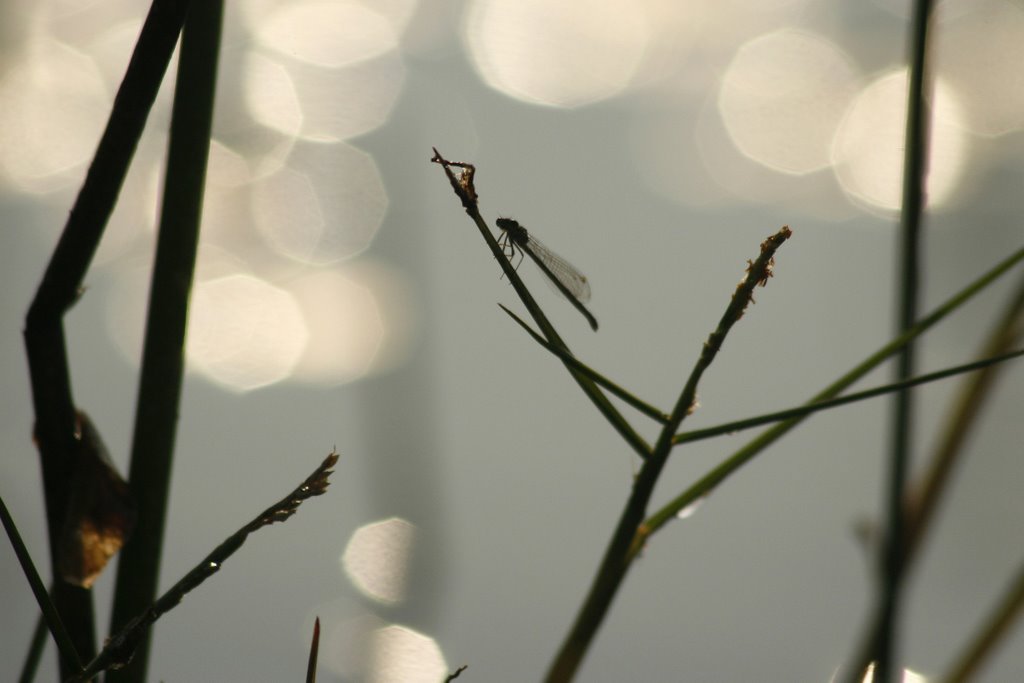
We stopped for small creatures, too. Just as beautiful and intricate as the big five… this dragonfly and jeweled beetle amused us for a while.


From a jeep, you sometimes miss the little details although this hardly looked small to me at the time...


Many of the animals have become habituated to jeeps. That isn’t to say they don’t respond to the jeep – they do. Some animals are skittish and take off at the sound of the motor. Others, like lions, seem oblivious to these large metal objects barreling through the bush. But whatever the reaction, it is a response to the jeep as an object. The animals don't seem to register the fact that six people -- other animals -- may be contained in the metal box that has chosen to invade their territory.

On foot, you are just another animal. And the animals seemed to show as much wonder and curiosity about us as we did about them.

Waterbuck


Puku


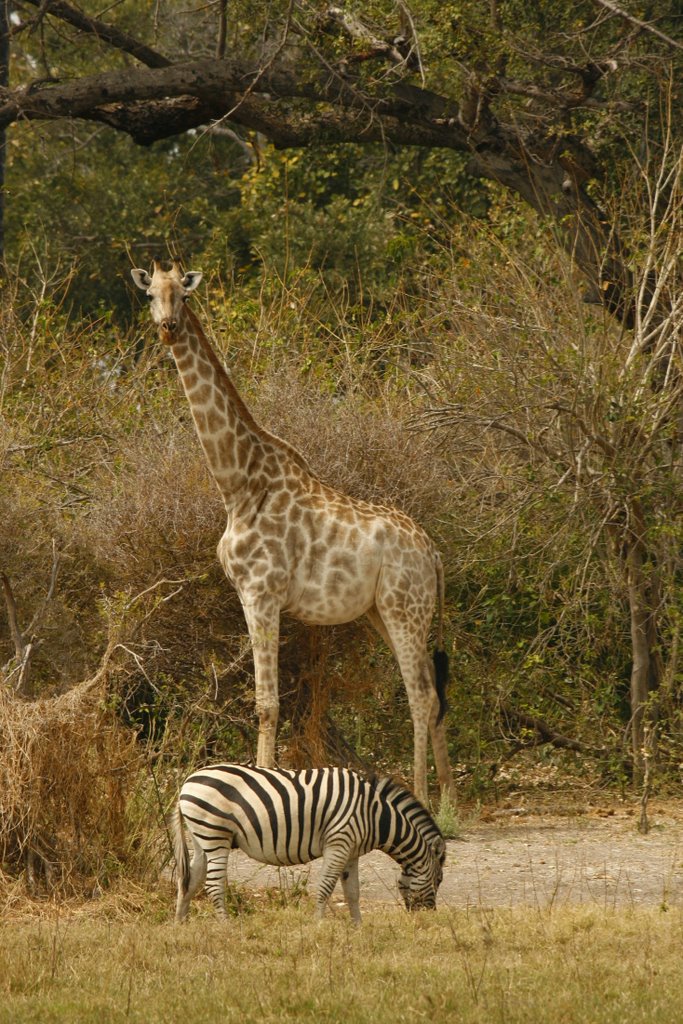
Giraffes have seemed to me very skittish around jeeps and would never wander near the camps where I have stayed. I was delighted with their inquisitiveness when we stopped for a short break near where they were grazing.


Did I mention being treed by a hippo?

Hippos leave the cool waters of the river at night to forage for the vast amounts of vegetation they need to sustain themselves. They were usually back in the river by the time we made our way out of camp in the morning so you can imagine our surprise (and that is an understatement) when we saw this fellow roaming about. He was obviously late returning from the party, a bit confused by the bright sun and generally appeared a bit surly.


We were between him and the river. I was beginning to figure out why the web site said, in describing the fitness level necessary for this trip, “Must be able to run at least 30 meters fast.” Well, I had lied and I was wondering if now was the time to tell Deb, our guide, about my shortcoming although somehow, I think she knew. I kept waiting for her to shout, “Run for it!”

I was weighing the alternatives. Should I try to run, knowing it wouldn’t be fast and it might not be 30 meters? Should I try to explain that I hadn’t run since my kids reached the point that they could outrun me and, if so, how did I do that while everyone else was running and in as few words as possible? Or, should I roll up in a ball and throw myself on the mercy of this hippo? I seem to remember the roll up in a ball trick from being coached on what to do if I ran into a bear while hiking and he hadn’t been frightened away by my bear bell.

Fortunately, I didn’t have to make that decision because our evasion plan called for climbing a tree rather than running. You are asking, at this moment, how I can climb a tree if I can’t run 30 meters. Ha! I was asking myself the same question.

Thus began my great affection for African termites and the huge mounds they build, abandon and which become elevated planters for trees that otherwise might be trampled by elephants. The mounds give shelter to small burrowing animals and the trees offer respite from the sun to impala and other antelope. These mounds can reach surprising heights but as we made our way to the tree about to become our salvation, I could see myself scrambling up its termite mound base much more easily than scaling its trunk.

None too soon we were huddled together at the top of the mound hugging the trunk and low hanging limbs of the tree making its home atop this ancient termite structure.


The hippo clearly spotted us but lost some element of danger when he hid behind his own tree!


Elephants


I have been physically closer to elephants than while walking through the Southern Luangwa Park.
In jeeps, elephants tend to ignore you... You can be relatively close and they know you are there. Sometimes they show some displeasure, sometimes they let you know how insignificant they think you are by their demeanor.
When they have wandered into the camps in which I have stayed, to sleep or to feed, they seem to just tolerate humans. You have invaded their territory but they know there is nothing to be done about it but they’ll be damned if they’ll let you get in the way of their favorite stand of mopani trees.
In Zambia, I felt closer – more significant. Here, I was uninvited in their territory and not part of a metal box that rendered me part of the background. Here, I was another animal – a potential threat, an uncertainty.


There are more Zambia stories to come, like, "Why it is important to know the difference between a centipede and a millipede." (Can you guess that it has something to do with its proximity to you?) and "How quickly I forget my fears...."


K-

Monday, October 02, 2006

Xigera.... Water and light

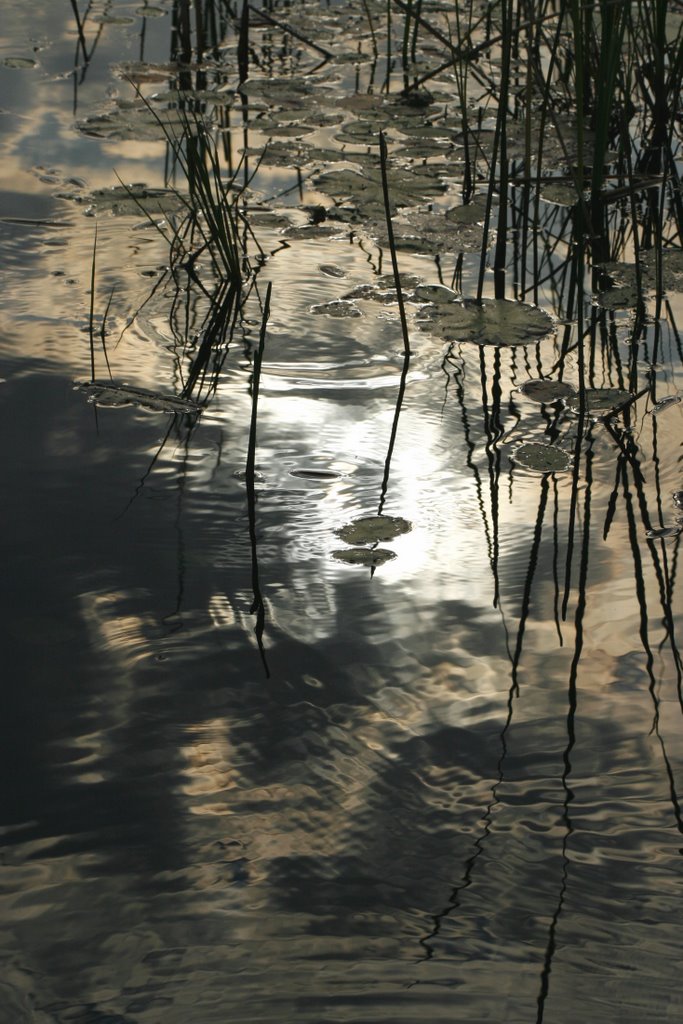
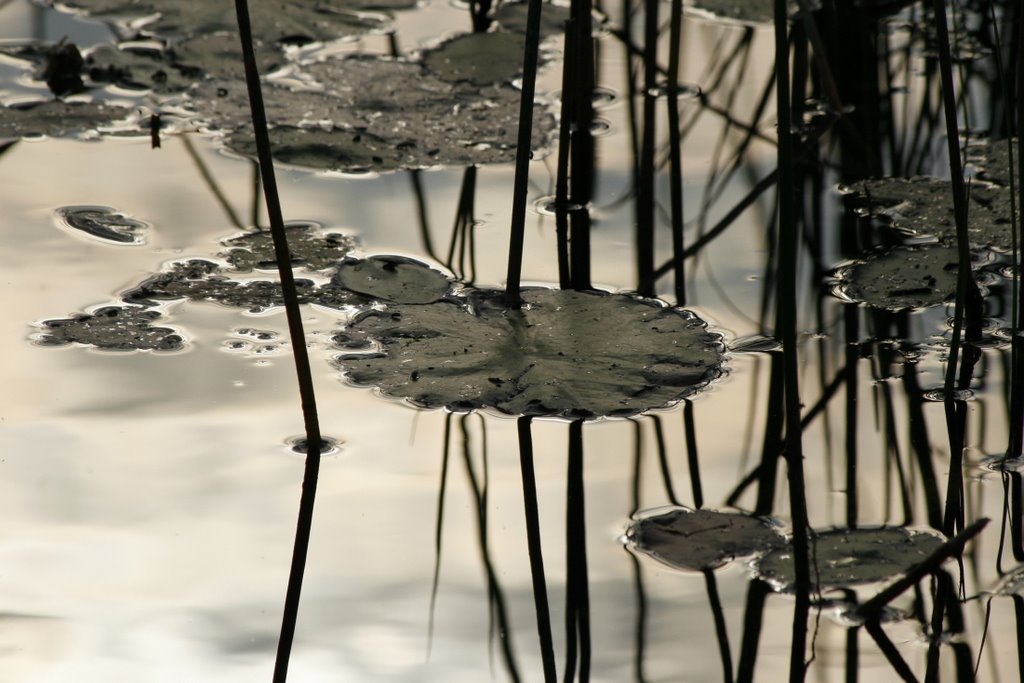
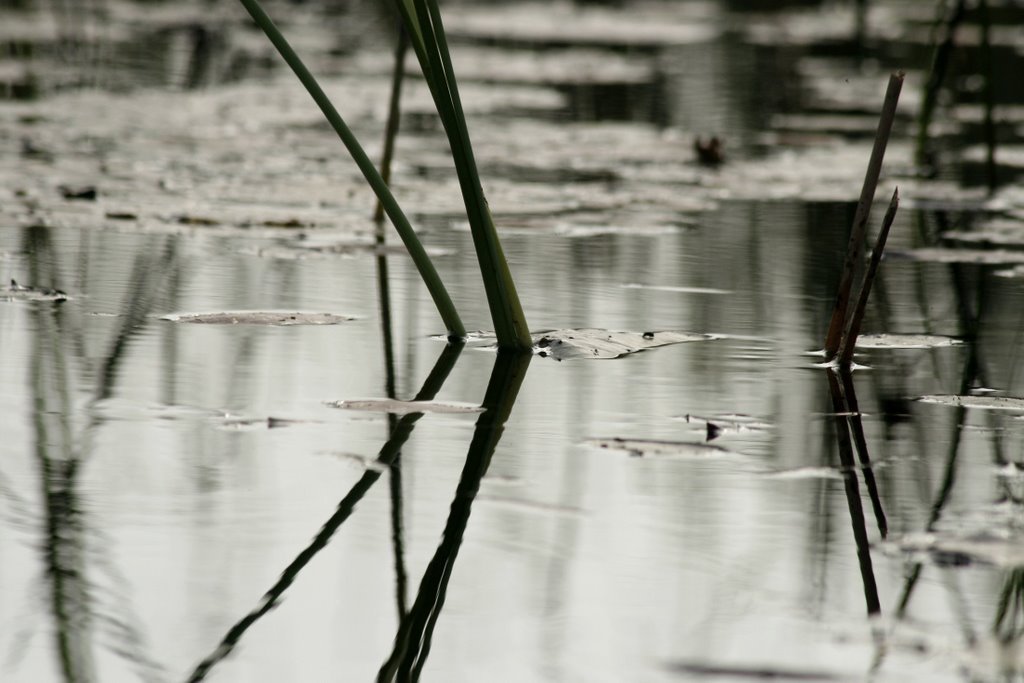
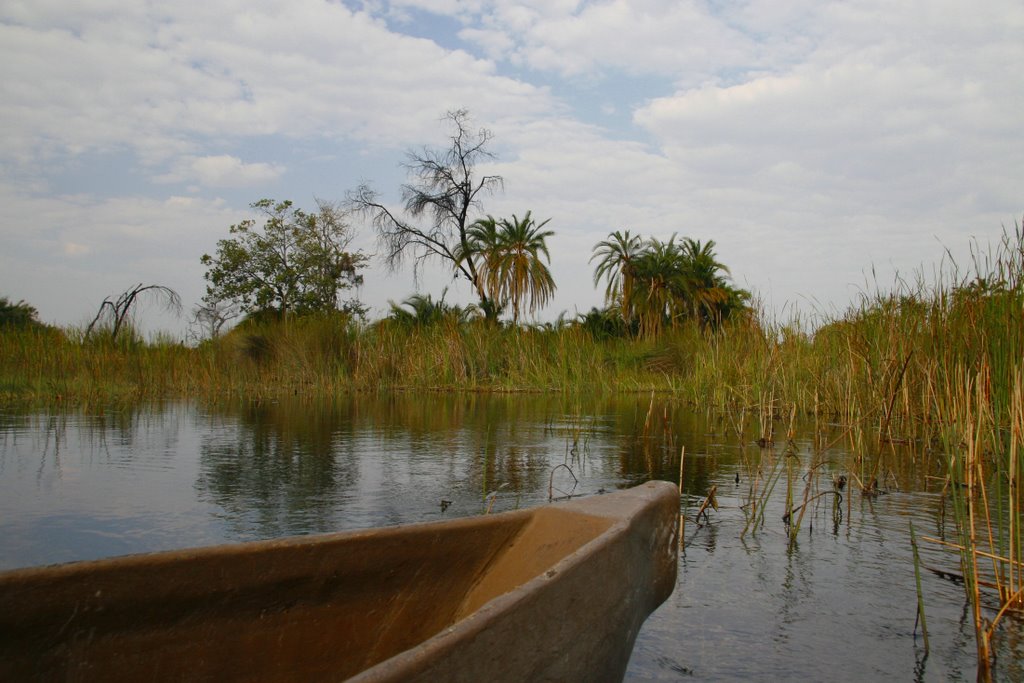
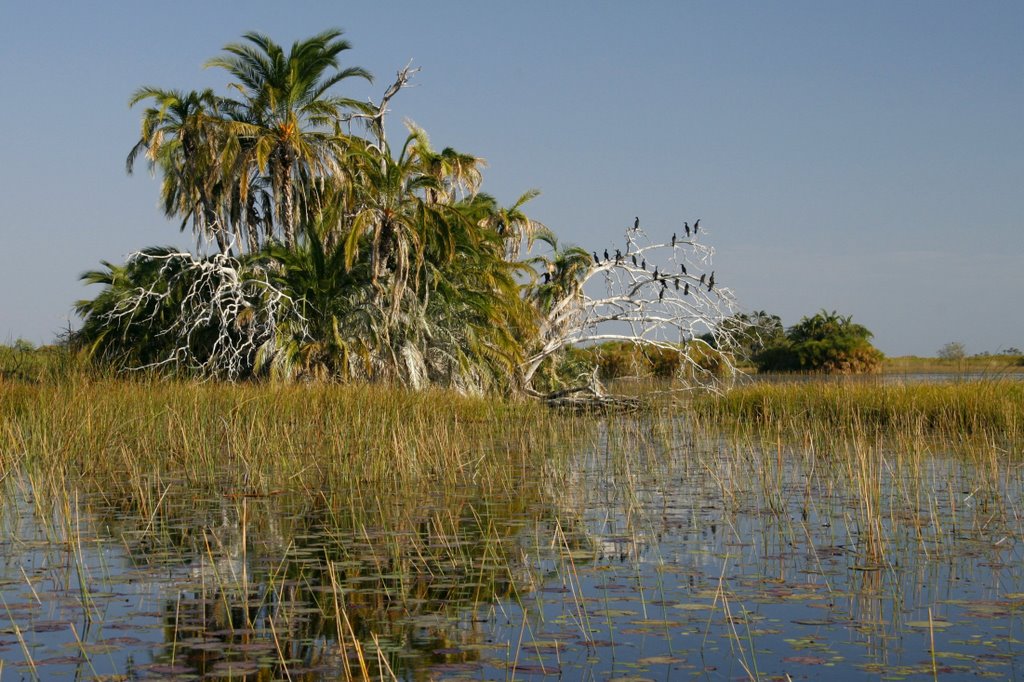
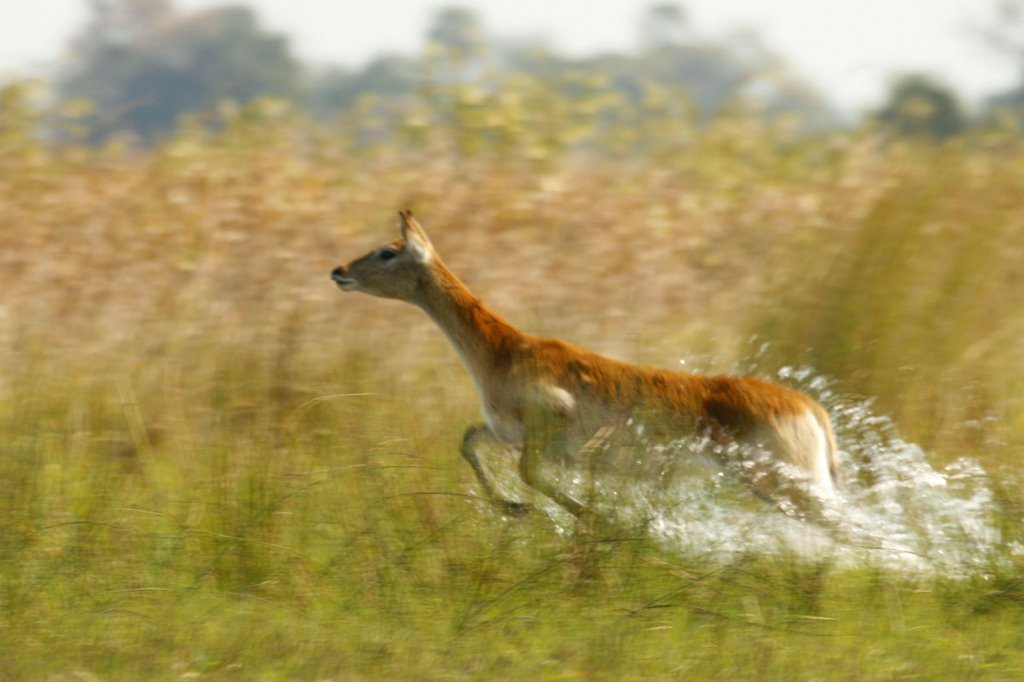
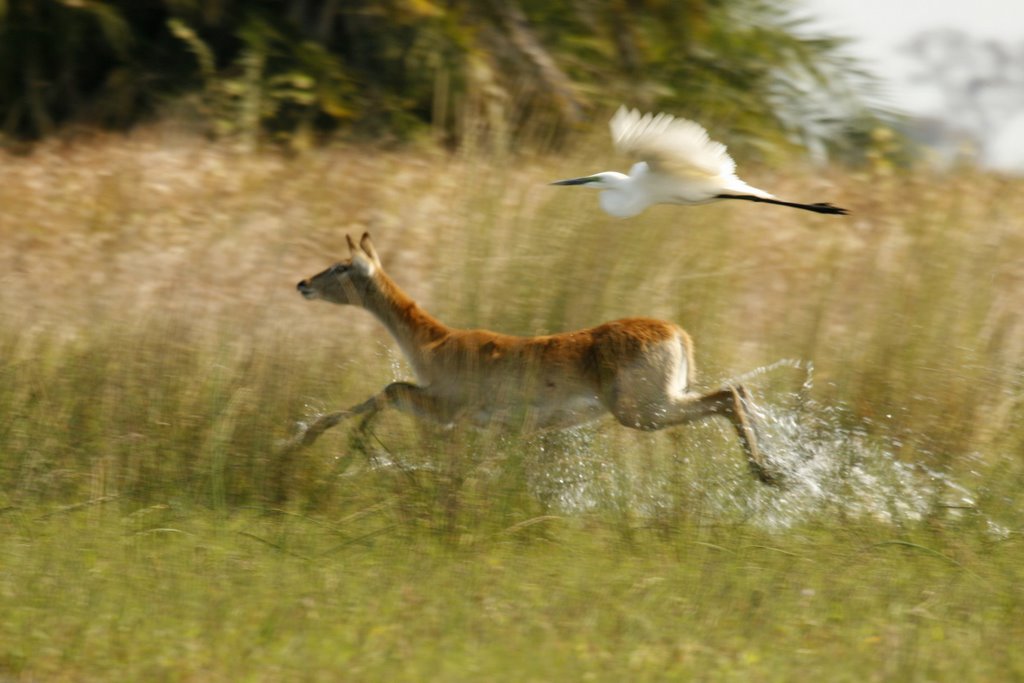
Xigera is in the Moremi Game Reserve in the Okavango Delta. It is a water world and the light creates ethereal reflections and striking images everywhere you look.


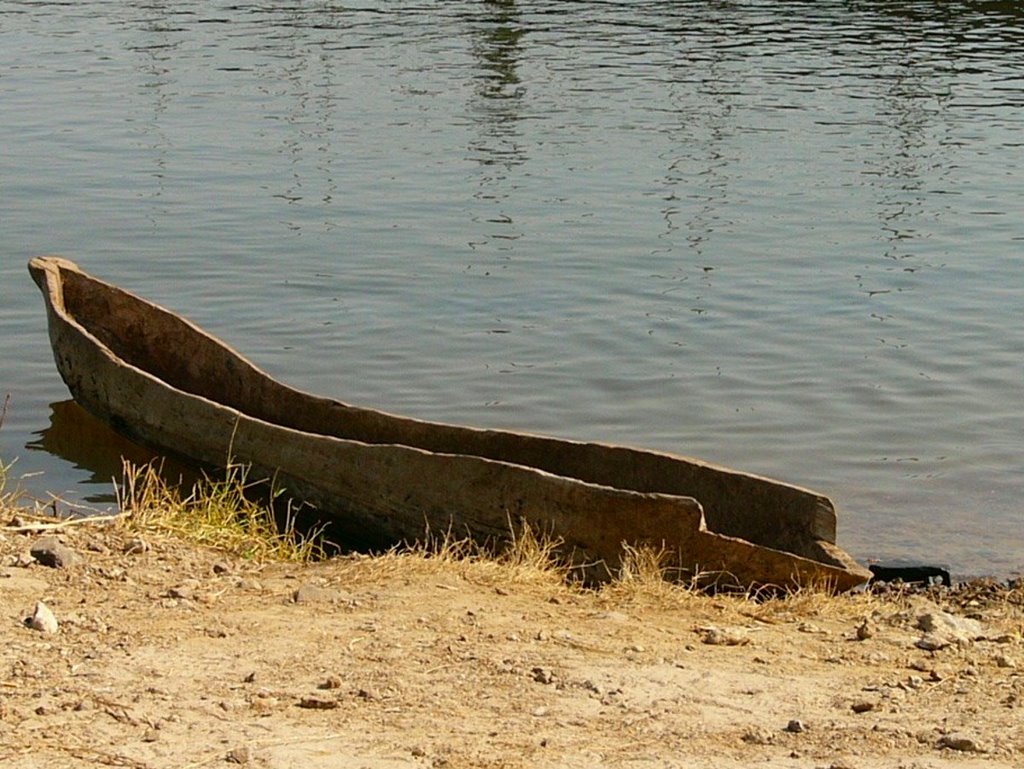
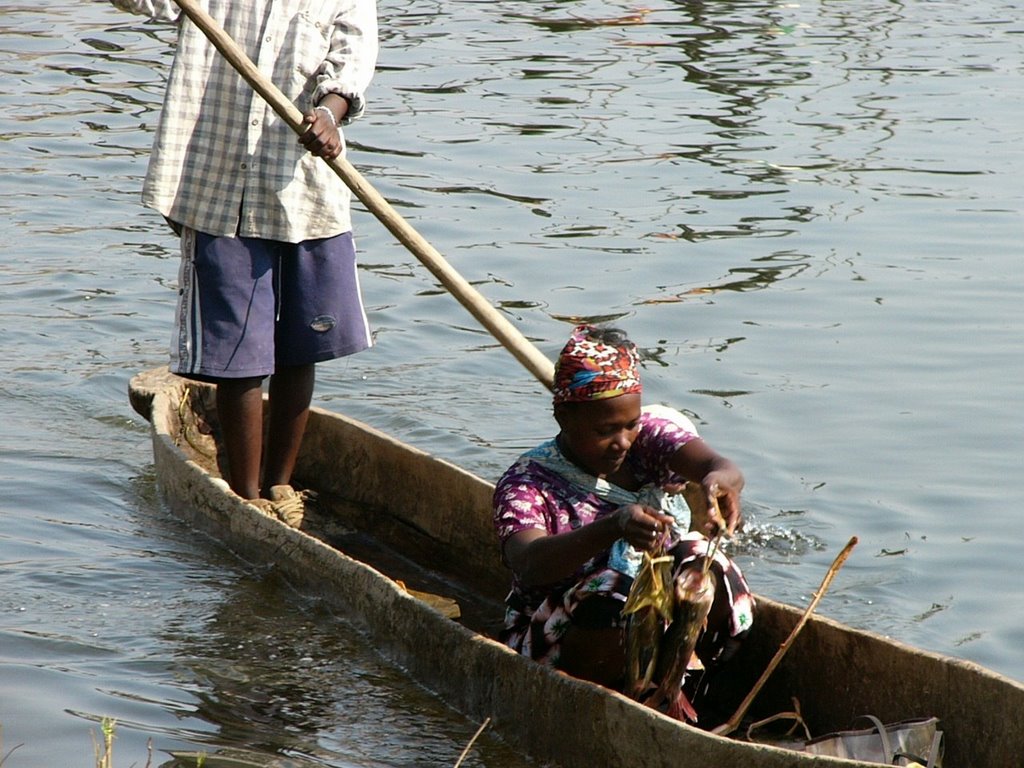
We explore either in a mokoro or by small motorboat. A Mokoro is a dugout canoe made from the trunk of a single tree. Rather, they used to be -- to preserve the large trees in the Okavango Delta mokoros are now made of fiberglass. They still look like wood but no splinters!


Fishing and transportation are still by mokoro in some areas.


Each of the islands interspersed through the Delta is a breeding ground for the bird, insect and animal populations. Birds abound.


Giraffes are as curious about us as we are about them. The first time I saw lions mating, which is a long and noisy ritual, we were surprised to see an inquisitive giraffe getting fairly close to the lions and peeking over the bushes to see what was going on!


Some islands are completely taken over by birds.


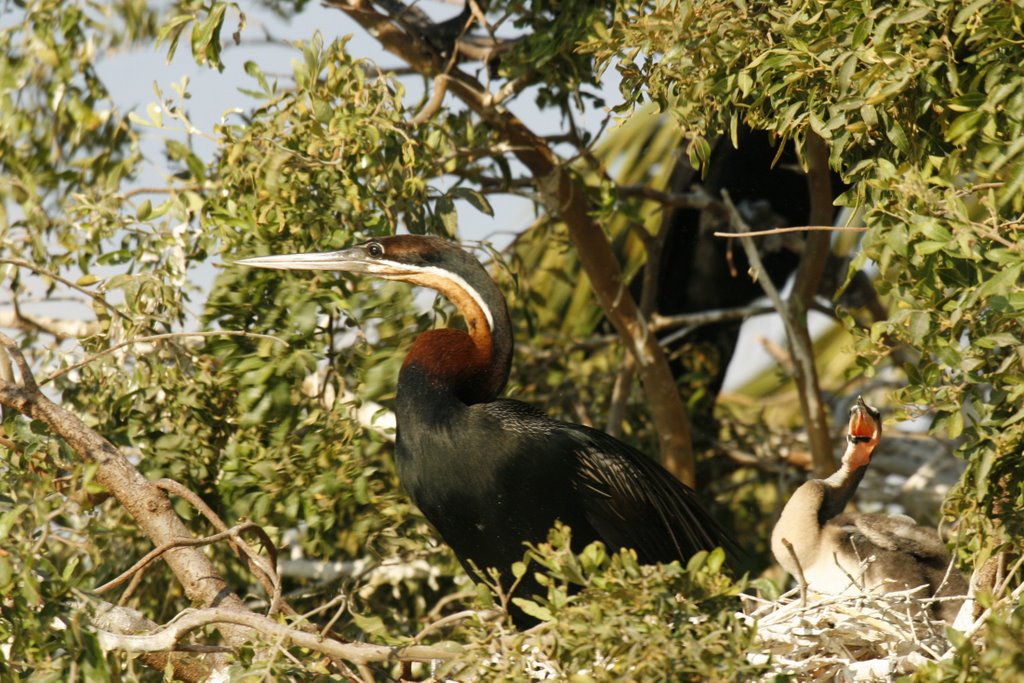
An African darter with a hungry mouth to feed.


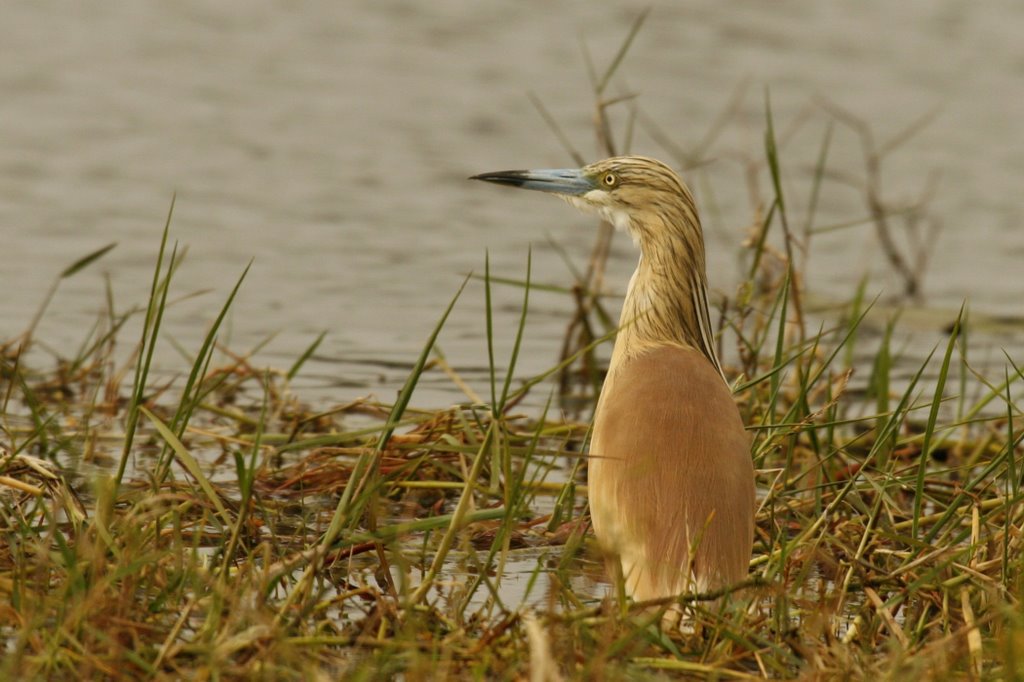
Squacco Heron


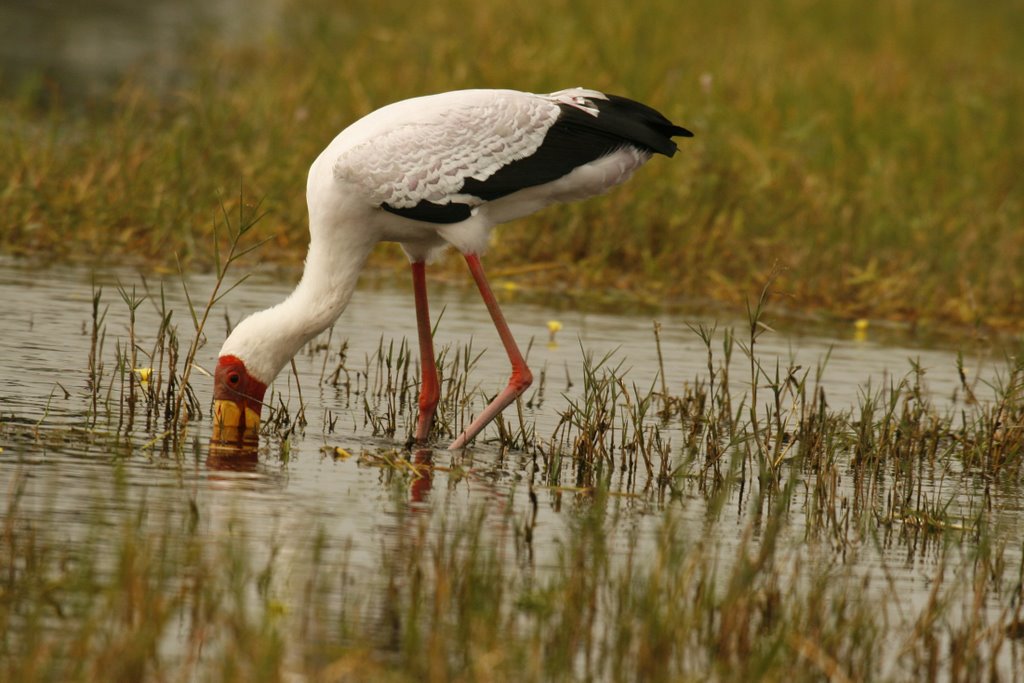
Yellow-billed Stork


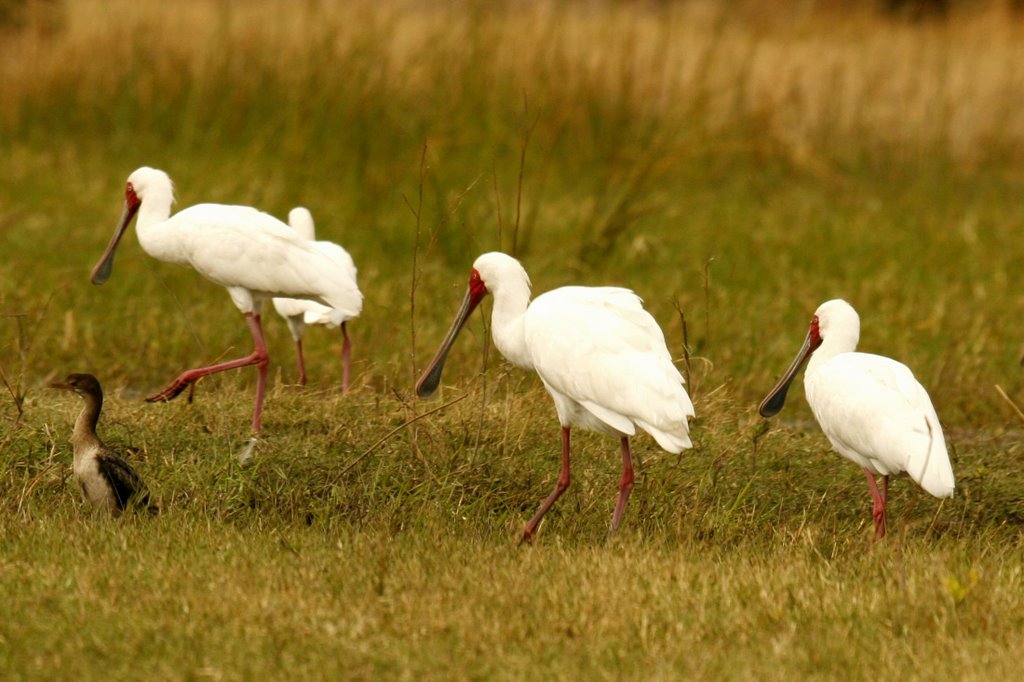
African spoonbill antics...


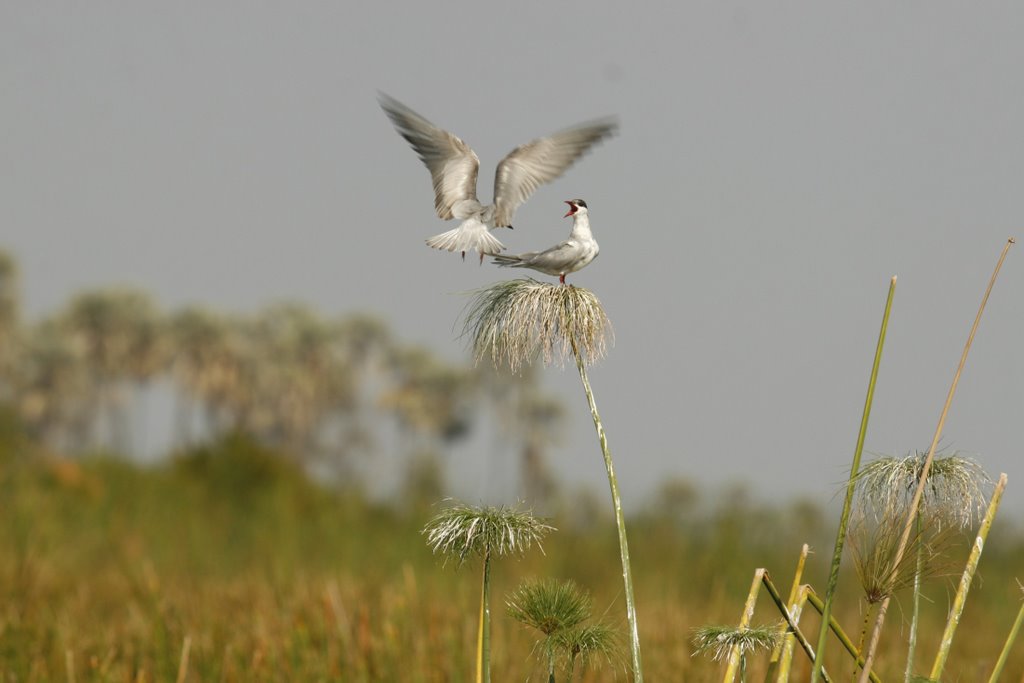
More territorial dancing this time from whiskered terns.


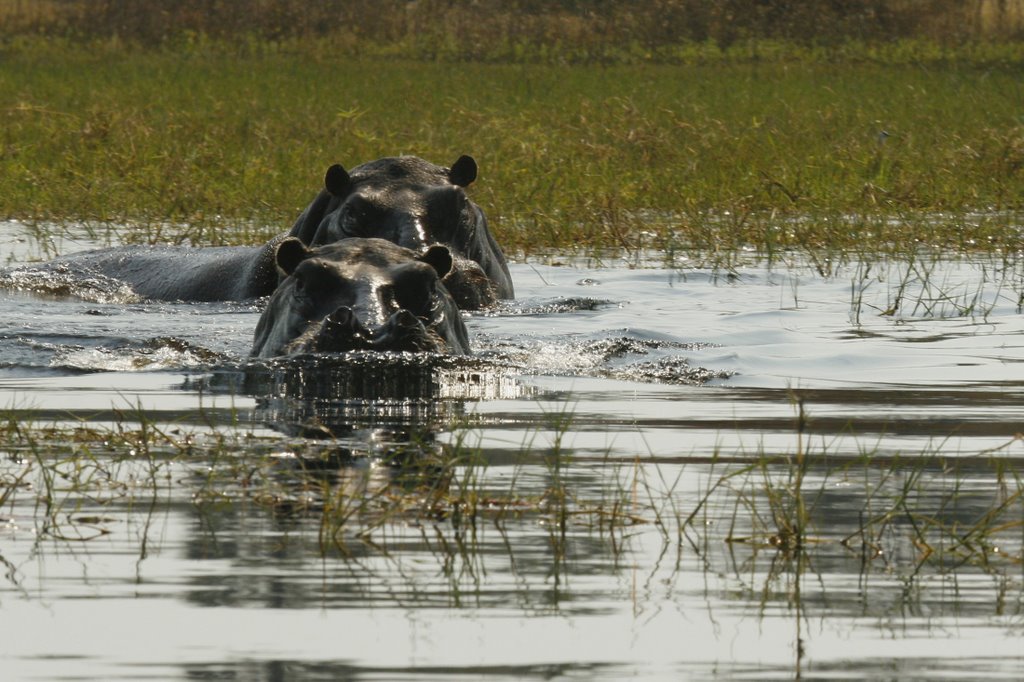
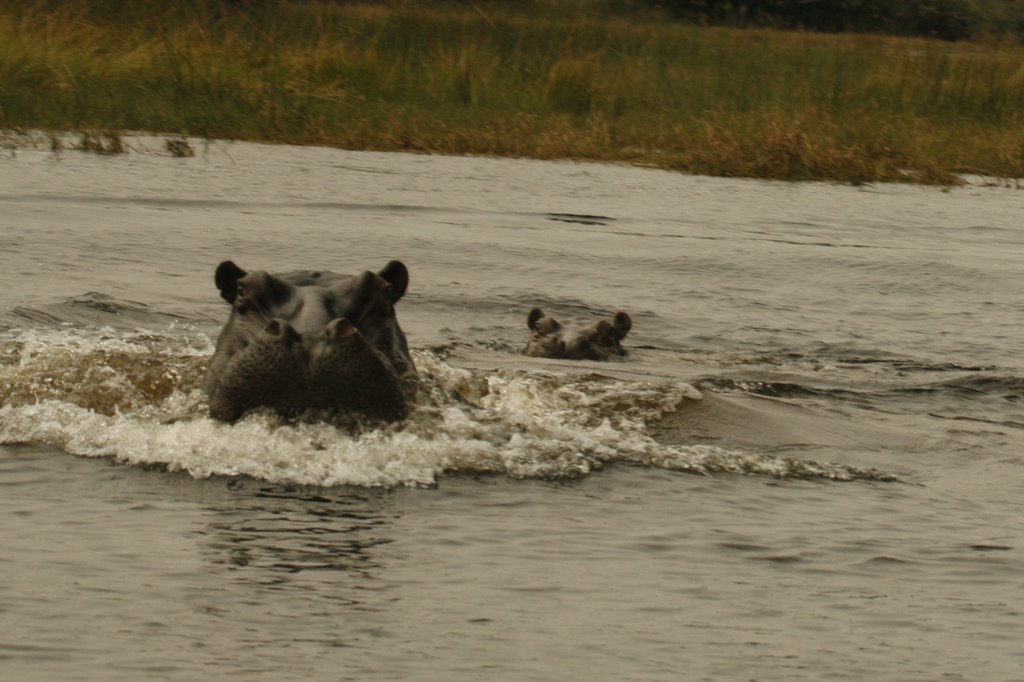
When these hippos decide they don't like us in their little corner of the delta, we take the hint and leave promptly.


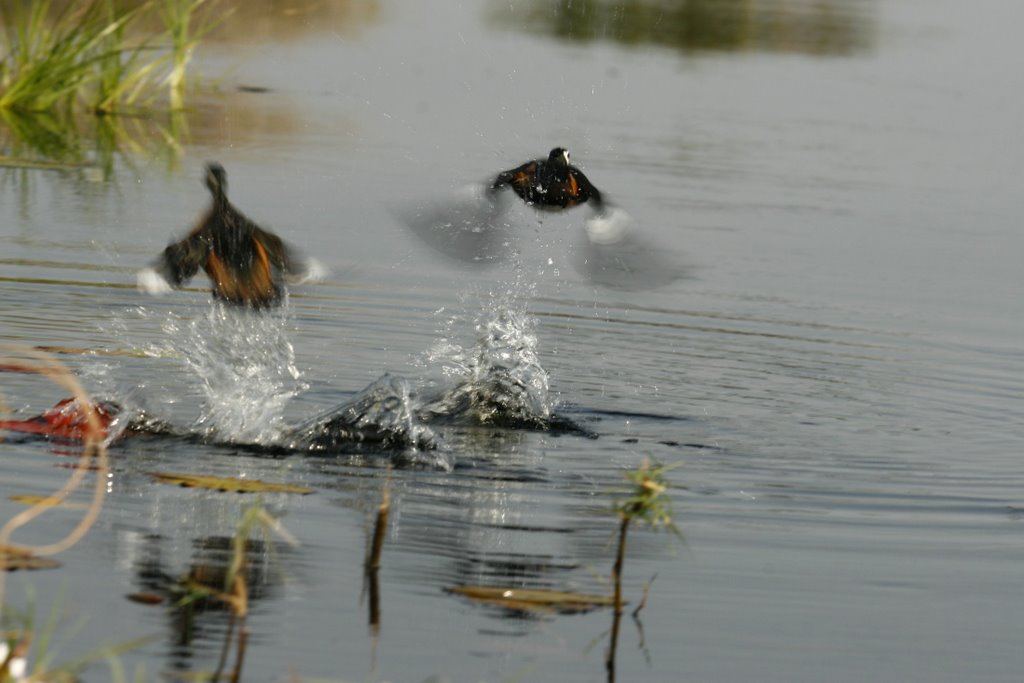
It seems our rapid departure startles a few of the neighbors....


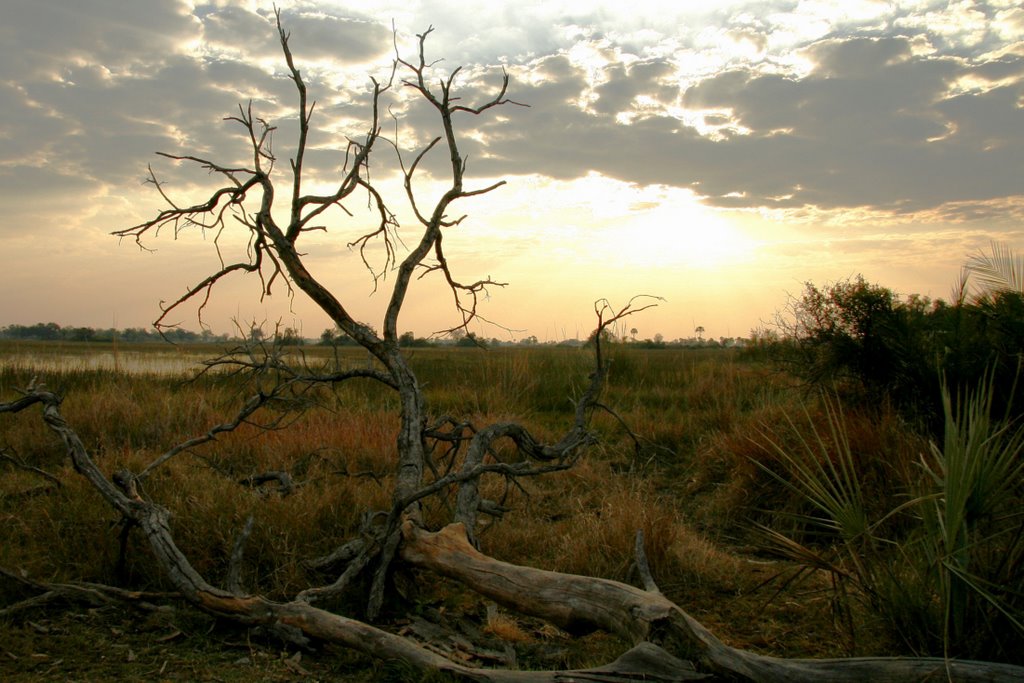
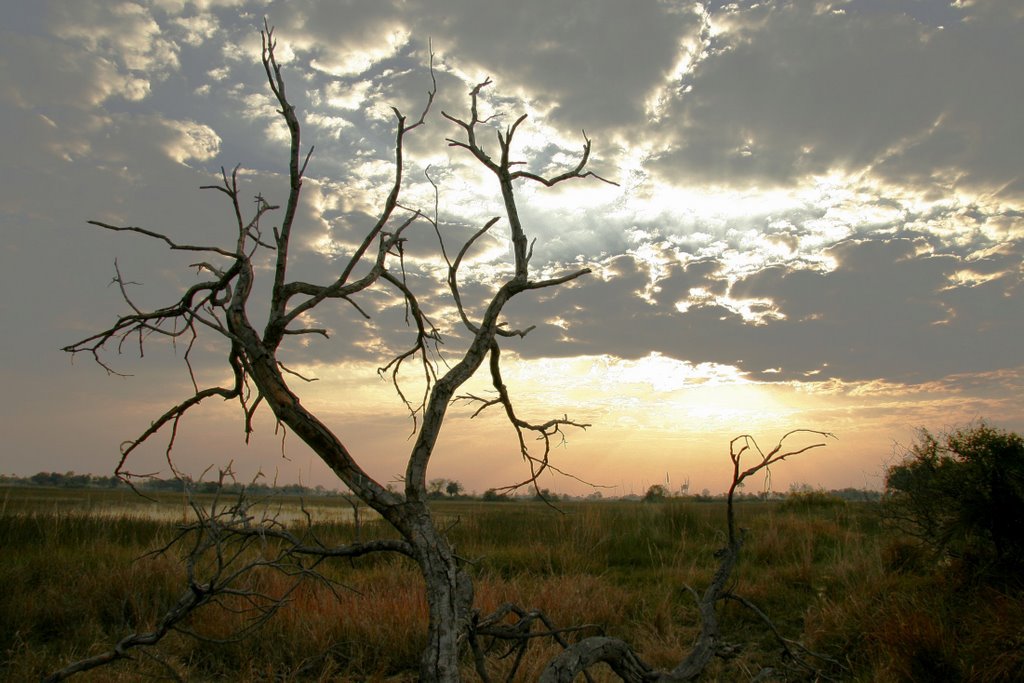
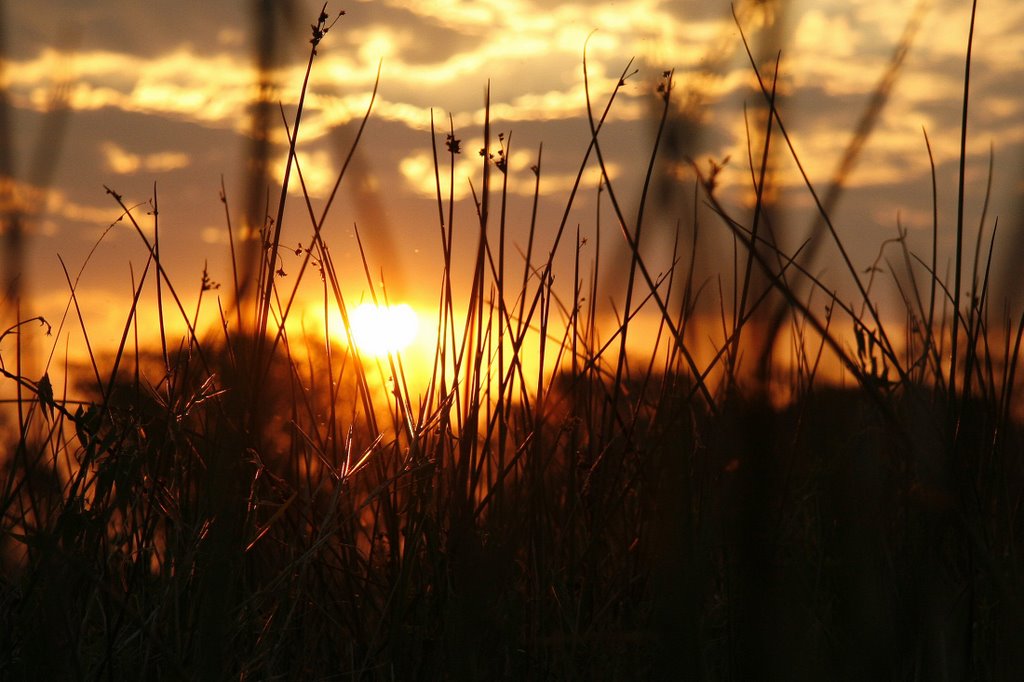
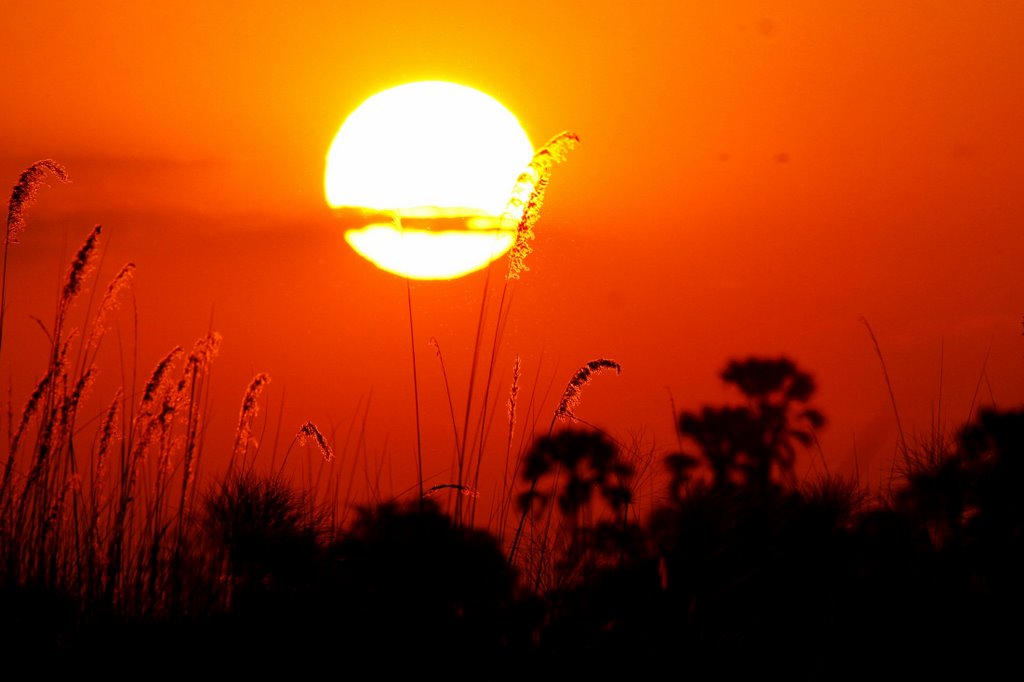
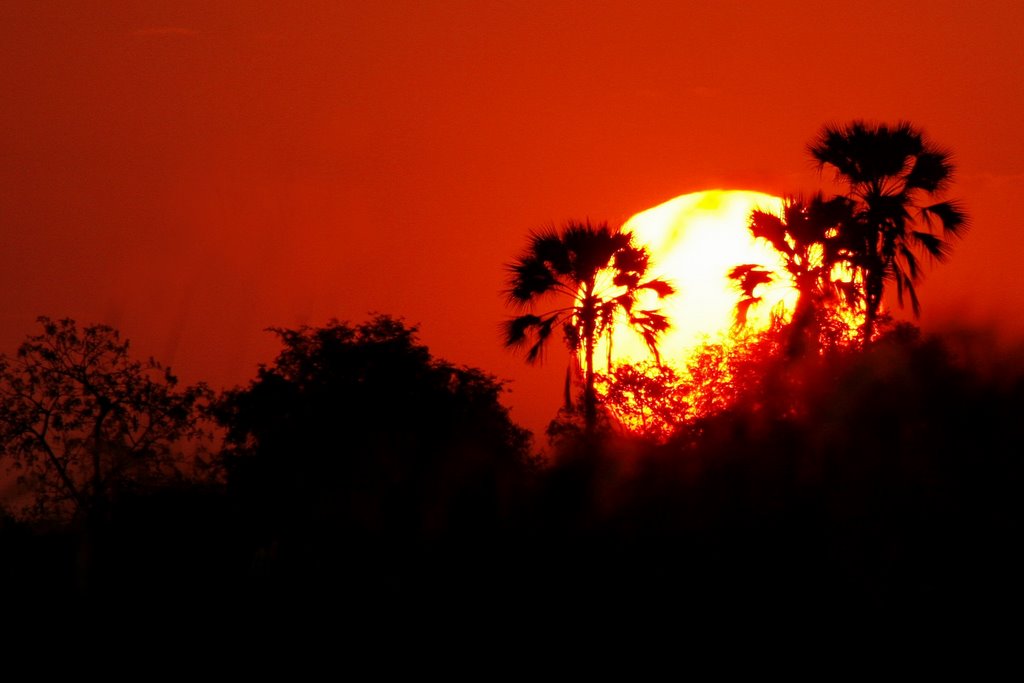
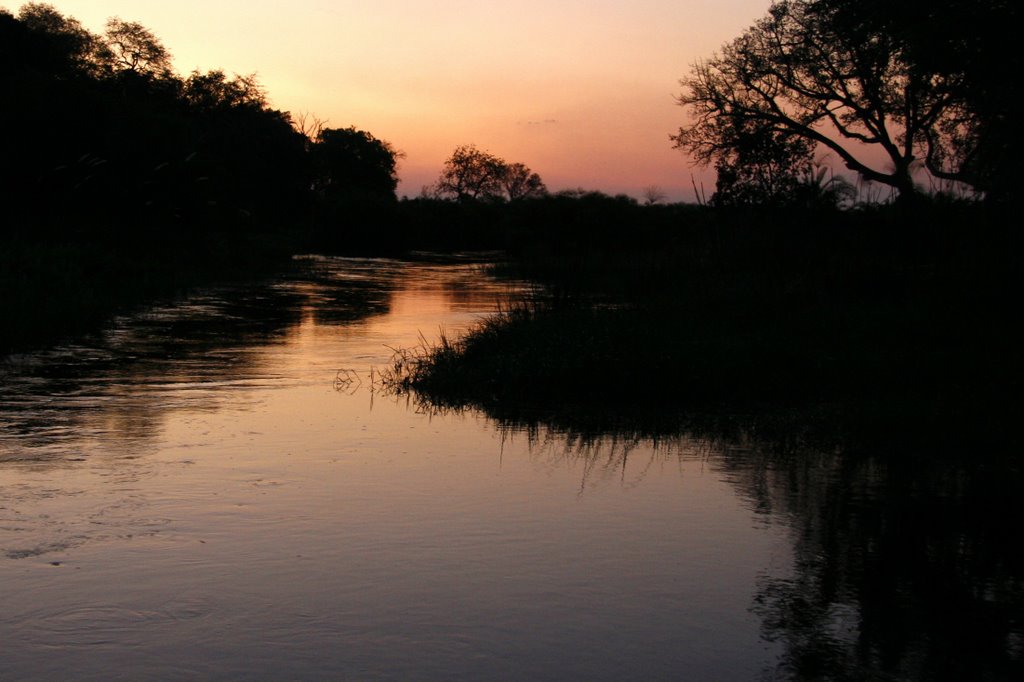
We watch a beautiful sunset take shape...


While photographing the sunset, Tony keeps prompting us to focus on the palms. They don't excite me as I see palms every day at home. I am more fascinated by the reeds.


Finally, I do. He is right.


But, it is time to head back to camp before darkness falls and the creatures of the night emerge!!


If I don't post for a while, it is because I am off on the next adventure. See you soon.


.

Past Posts

Archive

Traveler, observer and, on good days, wiser than the day before. Visit the Gallery at: www.wildeyedcam.smugmug.com

Taking flight...